Types of Wheat: What I Use
There are 6 major types of wheat
Hard Red Winter – bread flour (grown mainly in the Great Plains)
Hard Red Spring – high-protein bread and blending flour (Northern Plains)
Soft Red Winter – pastries, cakes, crackers
Durum – pasta and semolina
Hard White – whole wheat breads and Asian noodles
Soft White – cakes, pastries, crackers (Pacific Northwest)
What I use
The flours that I primarily use are blends of all organic hard red winter, hard red spring and malted barley with an ash content of 0.85%, also called Organic Type 85 Malted from Central Milling. Depending on the type of bread I am making, I blend the Organic Type 85 (T85) flour with an all organic 100% Whole Wheat of the Hard Red Spring variety (Organic Whole Wheat Hi-Pro Fine Flour) with an ash content of 1.60%. Occasionally, the hard red Spring variety is sold out so I opt for the all organic 100% Whole Wheat of the Hard White Spring variety (Organic Hard White Whole Wheat) with an ash content of 1.50%.
If you weren’t aware that there is a difference between Whole Wheat and Wheat, check out my post here.
I choose these particular flours and have specific ratios depending on what type of bread I make in order to achieve a specific flavor profile and texture. For example, I have traditionally used the Organic Hard Red Spring Whole Wheat for my 100% Whole Wheat Honey loaf. This type of flour has great body, depth of flavor and makes a darker crumb. Lately, this flour has been hard to come by so I have substituted it for the Hard White Spring Whole Wheat which has more extensibility than the Hard Red Spring Whole Wheat. It also has a slightly sweeter flavor and mouth feel more resembling a bread flour or all-purpose flour.
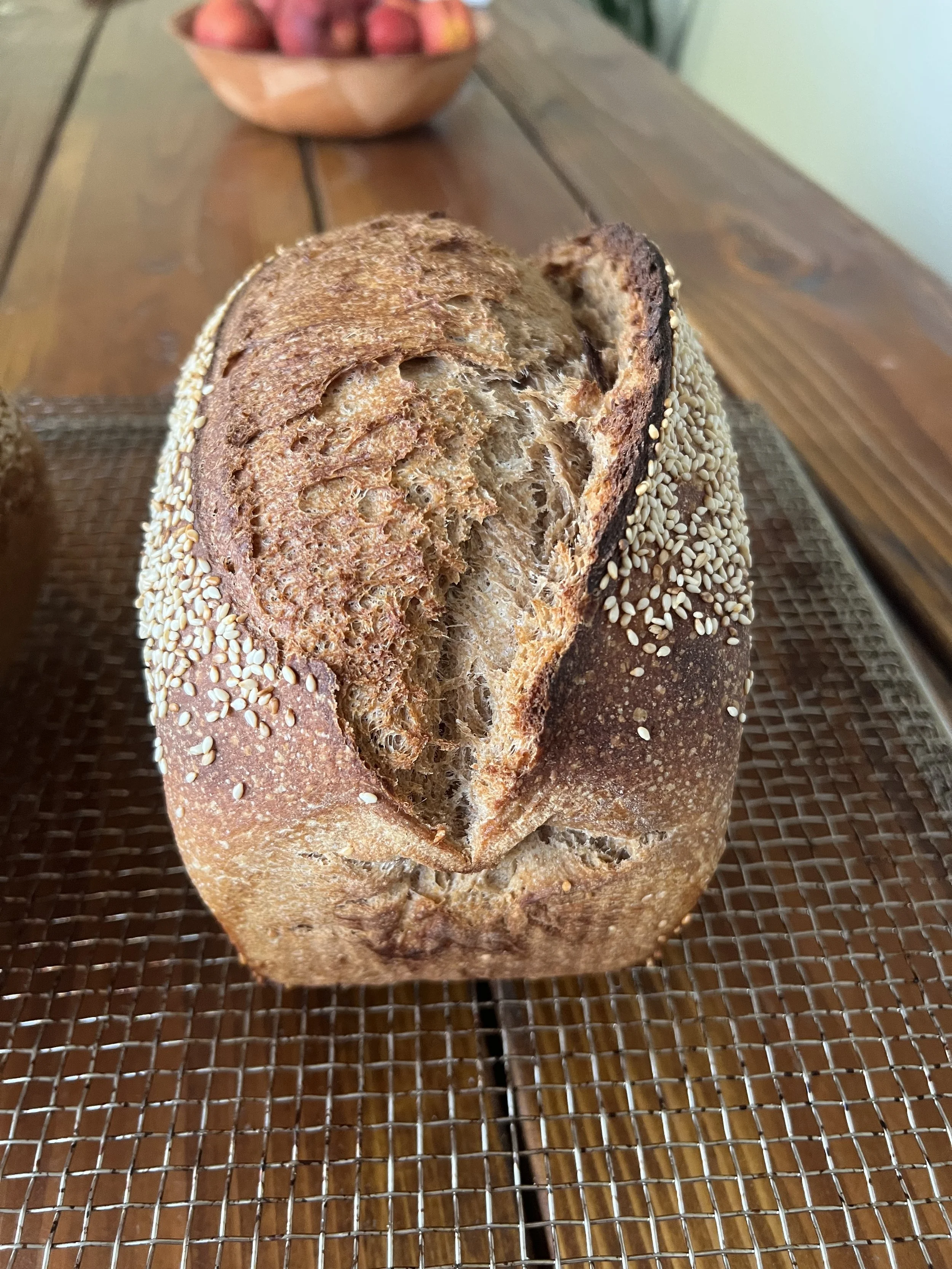
Made with 100% organic whole wheat flour you get all the nutrition of soluble fiber, vitamins and minerals contained within the bran and germ. This is the heartiest and tastiest bread you will ever eat. The addition of local honey adds a touch of sweetness to this pan loaf that keeps the crumb supple and perfect for hugging your turkey and cheese sandwich. Try it toasted, or not. The shape also adds for easy slicing.
Ingredients: 100% organic whole wheat flour, water, sourdough starter (organic whole wheat flour, water), honey, salt, sesame seeds.
Then for my Original Sourdough boule I blend 80% T85 Malted with 20% Whole Wheat (either hard red spring or hard white spring, depending of what is available).
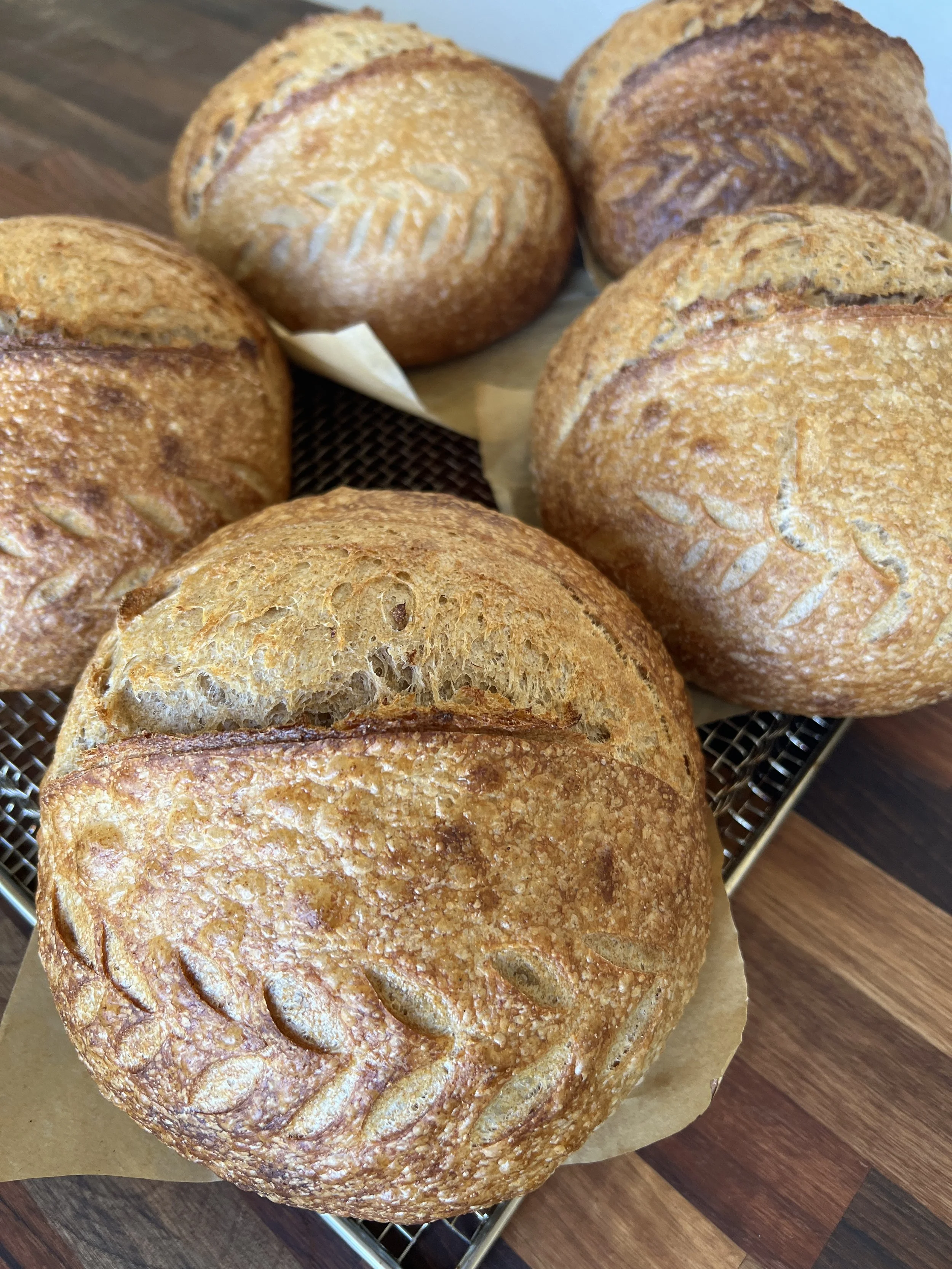
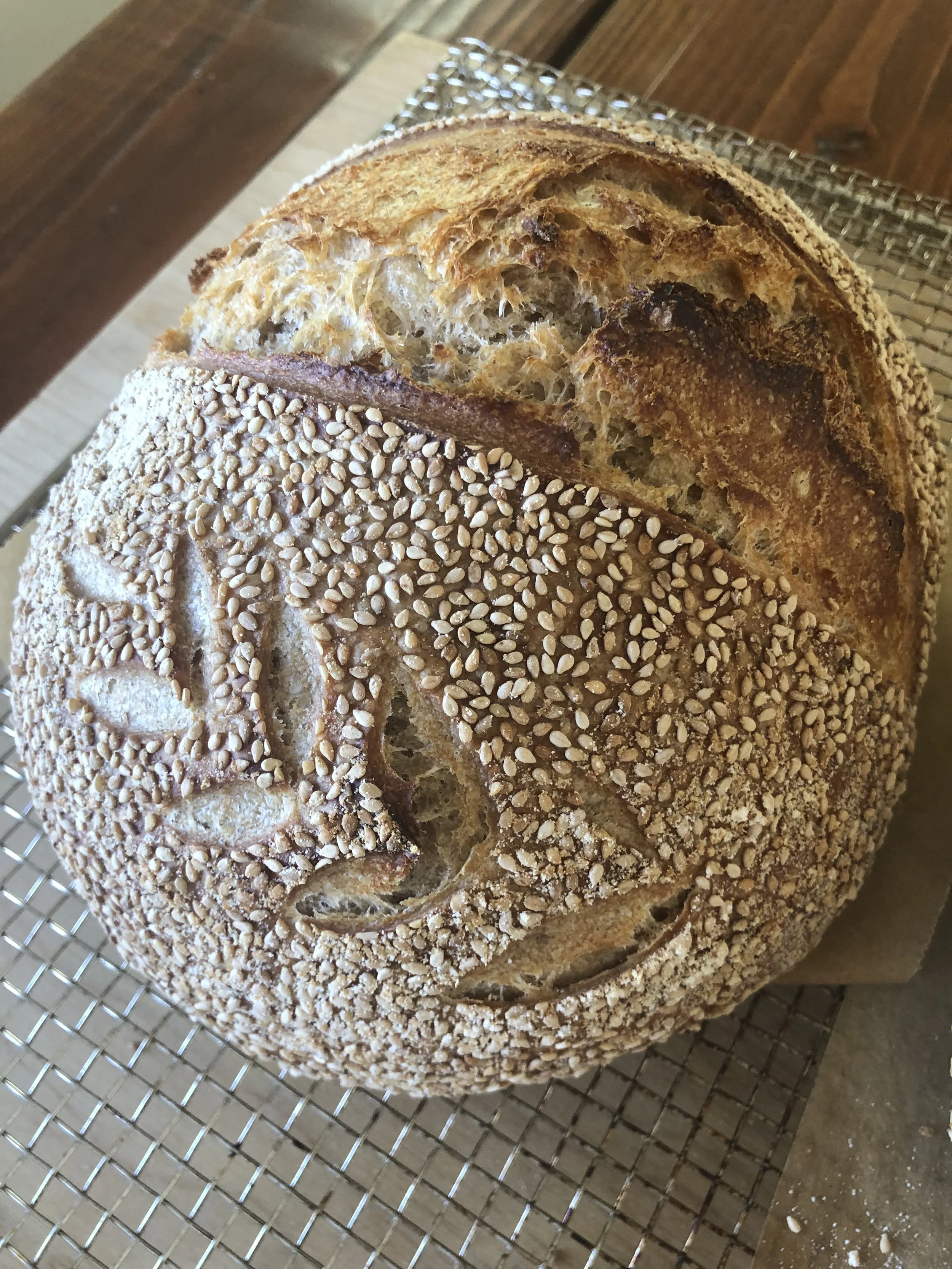
Ingredients: organic wheat and malted barley flour, organic whole wheat flour, water, organic sourdough starter, salt. Option to add toasted sesame or rosemary.
800 g (28.2 oz)
Where to Source
If you prefer not to pay for shipping from Central Milling, comparable flours would be a blend of King Arthur’s Organic Whole Wheat and Bread Flour which are both hard red varieties and easily found at your local grocery store. If you are in the southern California region and want to try locally milled flour I love Grist & Toll in Pasadena, which mills heirloom variety wheats.
My goal when picking which flour I use is less based on protein (albeit very important), but more on bran and germ content, which I know from the ash content. If you’re interested in ash content, a here is a wonderful article that explains in more detail. I prefer high extraction milled flours that retain more of the bran and germ = higher nutritional value. I like to think that my bread is healthier than most because it of this.